
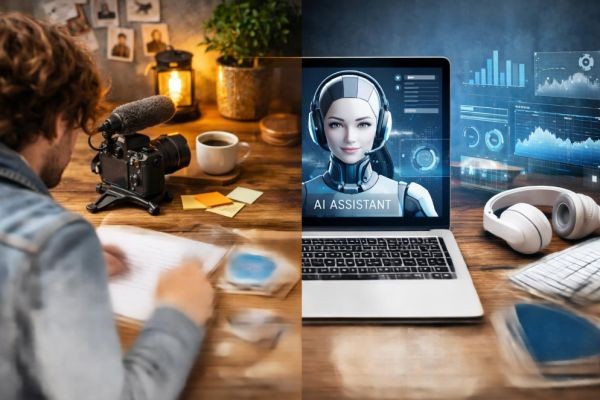
Why "Authentic" Content Is Beating Polished AI Posts Right Now
A few years ago, the internet was amazed by artificial intelligence's ability to write articles, create images, generate videos, and even imitate human conversation. Businesses rushed to automate content creation, and creators embraced AI to publish faster than ever before.
At first, it felt like a revolution.
But something unexpected happened.
As timelines became flooded with perfectly written captions, flawless blog posts, and highly optimized marketing copy, audiences began craving something different—authenticity.
In 2026, the most successful creators are not always the ones producing the most polished content. Instead, they're the ones sharing real experiences, honest opinions, personal stories, and content that feels unmistakably human.
The internet hasn't rejected AI. It has simply started rewarding creators who know how to combine AI with genuine human perspective.
So why is authentic content outperforming polished AI posts right now?
Let's find out.
The AI Content Boom
Artificial intelligence has made content creation dramatically easier.
Today, AI can help produce:
- Blog articles
- Social media captions
- Emails
- Product descriptions
- Videos
- Images
- Podcasts
- Presentations
- Marketing campaigns
Publishing content that once took days can now take minutes.
This has lowered the barrier to entry for creators around the world.
The Problem: Everyone Sounds Similar
While AI increased productivity, it also introduced a new challenge.
Much AI-generated content follows similar patterns.
Readers increasingly notice:
- Predictable openings
- Generic advice
- Repeated phrases
- Perfect grammar
- Similar sentence structures
- Lack of personal stories
As more creators rely on the same tools, much of the internet begins to feel repetitive.
People quickly recognize when content lacks a unique human voice.
Audiences Are Looking for Real People
Consumers today have access to more information than ever before.
What they often struggle to find is genuine experience.
Instead of polished perfection, people want creators who:
- Share failures
- Admit mistakes
- Explain lessons learned
- Offer honest opinions
- Tell personal stories
- Show behind-the-scenes moments
Authenticity creates emotional connection.
Facts inform people.
Stories inspire them.
Trust Has Become the Most Valuable Currency
The creator economy is built on trust.
People buy products, follow creators, and subscribe to newsletters because they believe the person behind the content.
AI can generate information.
Trust must still be earned.
Authentic creators consistently demonstrate:
- Transparency
- Consistency
- Expertise
- Honesty
- Personality
These qualities are difficult to automate.
Social Media Algorithms Are Changing
Modern algorithms increasingly prioritize meaningful engagement rather than polished presentation.
Platforms reward content that generates:
- Conversations
- Shares
- Saves
- Comments
- Watch time
- Returning viewers
Authentic stories naturally encourage discussion because people relate to them.
Highly polished AI content often receives attention but less emotional engagement.
Why Imperfection Feels More Human
Perfect content can sometimes feel distant.
Small imperfections often make creators more relatable.
Examples include:
- Speaking naturally
- Showing the creative process
- Sharing unfinished work
- Discussing failures
- Recording spontaneous videos
Audiences don't expect perfection.
They expect honesty.
AI Still Has an Important Role
Authenticity doesn't mean abandoning AI.
Successful creators use AI differently.
Instead of asking AI to create their entire identity, they use it to:
- Brainstorm ideas
- Research topics
- Improve grammar
- Organize outlines
- Generate headlines
- Summarize information
The final message still reflects their own experiences, opinions, and personality.
AI becomes an assistant—not a replacement.
The Rise of Human-First Content
Human-first content combines technology with personal perspective.
For example:
Instead of writing:
"Here are five productivity tips."
A creator writes:
"After struggling with burnout during my first startup, these five habits helped me regain focus."
The information may be similar.
The experience makes it memorable.
Businesses Are Learning the Same Lesson
Brands are also moving away from corporate perfection.
Customers increasingly prefer companies that:
- Admit mistakes
- Respond honestly
- Show real employees
- Share customer stories
- Explain decisions openly
Authentic branding creates stronger customer loyalty than polished advertising alone.
What Makes Content Feel Authentic?
Authenticity isn't about being unprofessional.
It's about being genuine.
Strong authentic content often includes:
Personal Experiences
Real stories make information believable.
Original Opinions
Readers value perspectives they cannot find elsewhere.
Transparency
Admitting uncertainty or limitations builds credibility.
Consistency
A recognizable voice creates long-term trust.
Value
Authenticity should still educate, entertain, or solve problems.
Being personal without providing value rarely succeeds.
Mistakes Creators Should Avoid
Some creators misunderstand authenticity.
Avoid:
- Manufacturing fake vulnerability
- Sharing personal details solely for attention
- Copying someone else's storytelling style
- Using AI without reviewing the output
- Posting low-quality content under the excuse of "being authentic"
Authenticity isn't randomness.
It's intentional honesty.
How AI Can Enhance Authenticity
Ironically, AI can actually help creators become more authentic.
It can handle repetitive work while freeing creators to focus on:
- Original ideas
- Storytelling
- Community engagement
- Creative thinking
- Relationship building
Technology handles efficiency.
Humans provide meaning.
The Future of Content Creation
The future isn't AI versus humans.
It's AI plus humans.
Creators who succeed in the coming years will combine:
- AI productivity
- Human creativity
- Personal experiences
- Critical thinking
- Emotional intelligence
Audiences won't remember who published the most content.
They'll remember who made them feel something.
Why This Matters for SEO
Search engines are evolving to reward content that demonstrates expertise, originality, and usefulness. While AI can help generate well-structured articles, search algorithms increasingly favor content that offers unique insights, real-world examples, and firsthand experience.
For bloggers and businesses, this means that simply publishing large volumes of AI-generated content is no longer enough. Adding personal observations, case studies, practical advice, and authentic perspectives helps content stand out in both search rankings and reader engagement.
Authenticity is becoming an SEO advantage, not just a branding strategy.
Final Thoughts
The rise of AI has transformed content creation, making it faster, more accessible, and more efficient than ever before. But as AI-generated content becomes increasingly common, audiences are placing a higher value on what machines cannot easily replicate: genuine human experience.
Authentic content resonates because it reflects real stories, honest opinions, and unique perspectives. It builds trust, encourages meaningful conversations, and creates lasting relationships between creators and their audiences.
This doesn't mean AI has no place in the creative process. On the contrary, AI is an incredibly powerful assistant when used to research, organize, edit, and streamline content. The difference is that the most successful creators allow AI to support their work—not define their voice.
In 2026, the winners won't be those who publish the most polished posts. They'll be the ones who combine the efficiency of AI with the authenticity of being human.
Frequently Asked Questions (FAQs)
1. What is authentic content?
Authentic content is original, honest, and based on real experiences, opinions, or expertise rather than generic or overly polished messaging.
2. Why is authentic content performing better than AI-generated content?
Audiences increasingly value trust, personal stories, and genuine perspectives, which often create stronger engagement than generic AI-generated posts.
3. Should creators stop using AI?
No. AI is an excellent tool for research, editing, and productivity. The key is to combine AI assistance with your own voice and experiences.
4. Does authentic content help SEO?
Yes. Search engines increasingly reward original, useful, and experience-driven content that provides value beyond generic information.