The Rise of Psychological Richness: Why a Good Life Isn't Just About Happiness Anymore
For decades, society sold us a simple formula for a successful life.
Study hard. Get a stable job. Find love. Earn money. Stay happy.
Psychologists weren't very different. Most theories of well-being revolved around two ideas: happiness and meaning. If you felt good or believed your life had purpose, you were considered to be living well.
But what if neither happiness nor meaning tells the whole story?
What about the people who leave comfortable careers to travel the world? What about artists who struggle financially but experience life intensely? What about someone whose greatest lessons came from heartbreak, failure, or uncertainty?
This question led researchers to explore a fascinating new idea called Psychological Richness Theory—the idea that a good life can also be measured by how deeply it changes us.
The Third Dimension of a Good Life
Traditionally, psychologists described two types of fulfilling lives.
The first was the happy life.
This life is characterized by comfort, pleasure, stability, and positive emotions. It's the feeling of contentment after a good meal, a relaxing weekend, or spending time with loved ones.
The second was the meaningful life.
This focuses on purpose, contribution, and values. A teacher shaping young minds, a doctor helping patients, or a parent raising children may find meaning even during difficult times.
Then researchers noticed something interesting.
Some people didn't fit neatly into either category.
Their lives weren't always happy.
They weren't always driven by a grand purpose.
Yet when asked if they would trade their experiences for a safer, easier life, many said no.
Why?
Because their lives were incredibly rich.
What Is Psychological Richness?
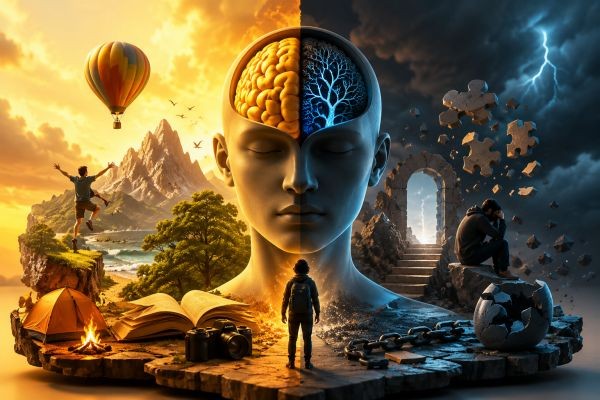
Psychological richness refers to a life filled with novel experiences, unexpected events, diverse perspectives, challenges, adventures, and moments that fundamentally change how we see the world.
A psychologically rich life is not necessarily comfortable.
In fact, it often includes confusion, uncertainty, mistakes, and discomfort.
But these experiences leave behind something valuable: a broader understanding of life.
Think of it this way.
Happiness makes life pleasant.
Meaning makes life purposeful.
Psychological richness makes life interesting.
Why Our Generation Is Craving Rich Experiences
Many young people today feel trapped between expectations and reality.
Social media constantly presents images of perfect lifestyles.
Everyone seems to be chasing happiness.
At the same time, career pressure pushes people toward practical decisions instead of meaningful experiences.
As a result, many people reach milestones they once dreamed about only to discover an uncomfortable feeling:
"I have everything I wanted, so why do I feel bored?"
Psychological Richness Theory offers an answer.
Humans don't just need comfort.
We need stimulation.
We need surprise.
We need stories.
A life without challenges may be peaceful, but it can also feel repetitive.
The Backpacker's Lesson
Imagine two individuals.
The first person spends ten years working the same comfortable job, living in the same city, following the same routine.
The second person travels through unfamiliar countries, gets lost in foreign cities, struggles with language barriers, faces setbacks, and meets people from completely different cultures.
The first life might contain more comfort.
The second life might contain more psychological richness.
Years later, the traveler may not remember every hotel room or flight.
But they will remember the night they missed a train in a foreign country, the stranger who helped them, and the unexpected conversations that changed their worldview.
These experiences become part of their identity.
The Hidden Value of Failure
One of the most fascinating aspects of Psychological Richness Theory is its relationship with failure.
Most people view failure as something to avoid.
Yet when people reflect on their lives, many of their most transformative moments emerge from failure rather than success.
The failed business that taught resilience.
The rejected application that led to a better opportunity.
The breakup that forced personal growth.
The embarrassing mistake that inspired self-awareness.
Success often confirms who we already are.
Failure frequently changes who we become.
From the perspective of psychological richness, failure isn't merely a setback.
It's raw material for transformation.
Why Comfort Can Become a Trap
Modern life is designed around convenience.
Food arrives at our doorstep.
Entertainment is available instantly.
Algorithms show us content we already agree with.
Technology has made life easier than ever before.
Yet ease doesn't always create growth.
When every experience is predictable, life can start feeling repetitive.
Psychological richness emerges when we step beyond familiar patterns.
This doesn't mean quitting your job or moving across the world.
Sometimes richness comes from learning a new skill, having difficult conversations, reading opposing viewpoints, or exploring unfamiliar places in your own city.
Growth often begins at the edge of comfort.
The Stories We Tell About Our Lives
Imagine yourself at eighty years old, looking back.
Would you rather say:
"I was comfortable every day."
Or:
"I experienced things I never expected. I made mistakes. I learned. I changed. I lived."
Most people naturally gravitate toward the second answer.
This reveals something important.
Humans are storytelling creatures.
We don't simply collect achievements.
We collect experiences.
The moments that become our favorite stories are rarely the easiest ones.
They're the unexpected adventures, strange encounters, challenges, risks, and discoveries that shaped us.
How to Build a Psychologically Rich Life
A psychologically rich life doesn't require wealth, fame, or extraordinary talent.
It requires curiosity.
Try things that might fail.
Travel somewhere unfamiliar.
Talk to people outside your social circle.
Read books that challenge your beliefs.
Learn skills unrelated to your career.
Say yes to experiences that make you slightly uncomfortable.
The goal isn't to create a perfect life.
The goal is to create a life that expands your perspective.
Because at the end of the day, happiness can fade and purpose can evolve.
But experiences that change the way you see the world stay with you forever.
Final Thought
Perhaps the greatest mistake modern society makes is assuming that the best life is the happiest life.
Psychological Richness Theory suggests something different.
A fulfilling life isn't measured solely by smiles, success, or stability.
It's measured by how many times life surprised you.
How many times it challenged your assumptions.
How many times it transformed the person you thought you were.
Maybe the question isn't:
"Am I happy?"
Or even:
"Does my life have meaning?"
Maybe the deeper question is:
"Am I collecting experiences that make my life richer than it was yesterday?"
And perhaps that is where a truly unforgettable life begins.