The Death of the 9-to-5? Why Flexible Careers Are Becoming the New Normal
For decades, the traditional 9-to-5 office job was considered the ultimate symbol of career success. A stable paycheck, fixed working hours, office meetings, and a predictable routine defined professional life for millions around the world.
But fast forward to 2026, and that picture looks very different.
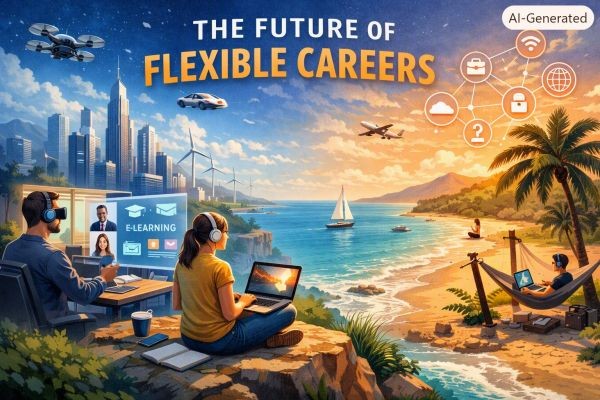
Today, millions of professionals are choosing flexibility over routine. Remote workers are logging in from mountain cabins, freelancers are earning more than corporate employees, and digital creators are building six-figure businesses from their laptops.
The question isn't whether work is changing anymore.
The real question is:
Is the 9-to-5 slowly becoming obsolete?
The answer may surprise you.
The Workplace Revolution Nobody Saw Coming
The transformation didn't happen overnight.
Several major events accelerated the shift toward flexible careers:
- The rise of remote work
- AI-powered productivity tools
- Better internet connectivity
- Global freelancing platforms
- Changing employee expectations
- Businesses reducing office costs
What started as an emergency solution during the pandemic has evolved into a permanent change in how companies hire talent.
Instead of asking:
"Where do you work?"
People now ask:
"What kind of work do you do?"
Location has become less important than skills.
Why Employees No Longer Want Traditional Jobs
One of the biggest reasons behind this shift is changing priorities.
Younger professionals are no longer chasing only high salaries.
They're looking for:
- Freedom
- Purpose
- Better work-life balance
- Time with family
- Mental well-being
- Opportunities to learn continuously
Working eight or nine hours inside an office every day no longer appeals to many people.
Instead, many prefer finishing work in four focused hours and spending the rest of their day building side projects, learning new skills, or simply enjoying life.
Time has become more valuable than titles.
AI Is Changing Jobs Faster Than Ever
Artificial Intelligence has become one of the biggest drivers behind flexible careers.
Instead of replacing everyone, AI is transforming how work gets done.
Today's professionals use AI to:
- Write reports
- Design presentations
- Generate marketing content
- Analyze data
- Build software
- Edit videos
- Answer customer questions
- Automate repetitive tasks
As repetitive work disappears, employers increasingly care about results rather than hours spent at a desk.
If someone can finish an entire day's work in three hours using AI, does it still make sense to keep them online until 5 PM?
Many companies are beginning to think the answer is no.
Freelancing Is No Longer a Side Hustle
A few years ago, freelancing was often viewed as unstable.
Today, it's a legitimate career choice.
Designers, writers, programmers, marketers, video editors, consultants, and even accountants now work independently with clients from around the world.
Many freelancers earn significantly more than they did in traditional jobs because they:
- Set their own rates
- Choose their clients
- Work across multiple industries
- Control their schedules
Instead of depending on one employer, they're building multiple income streams.
That reduces financial risk while creating greater career freedom.
The Rise of Portfolio Careers
One of the biggest career trends in 2026 is the portfolio career.
Rather than relying on a single full-time job, professionals combine several income sources.
For example, someone might:
- Work remotely three days a week
- Teach online classes
- Run a YouTube channel
- Write newsletters
- Sell digital products
- Offer freelance consulting
Instead of having one career, they build an ecosystem of careers.
This approach not only increases earning potential but also creates more stability. If one income stream slows down, others continue generating revenue.
Remote Work Has Redefined Talent
Companies have realized something important:
The best employee doesn't always live nearby.
Organizations are now hiring globally instead of locally.
A startup in Canada can employ a designer in India.
A software company in Germany can hire developers in Brazil.
A marketing agency in Australia can collaborate with writers in the UK.
This global talent marketplace has opened opportunities that didn't exist just a few years ago.
For skilled professionals, geography is becoming less of a limitation.
The Gig Economy Keeps Growing
Ride-sharing and food delivery once dominated conversations about the gig economy.
Today, it has expanded far beyond those industries.
People now earn income through:
- Graphic design
- Video editing
- Translation
- Online tutoring
- Software development
- Virtual assistance
- Content writing
- AI prompt engineering
- Social media management
The internet has transformed skills into global services.
If you have expertise, there's likely someone somewhere willing to pay for it.
Work-Life Balance Is Finally Becoming Real
Traditional jobs often rewarded people for staying busy rather than being productive.
Flexible careers are changing that mindset.
Professionals can now:
- Attend family events without requesting leave
- Exercise during the day
- Travel while working
- Choose their most productive hours
- Avoid stressful daily commutes
Research continues to show that employees with greater flexibility often experience higher job satisfaction and lower burnout than those with rigid schedules.
For many workers, flexibility has become just as valuable as salary.
Businesses Benefit Too
Flexible work isn't only good for employees.
Companies gain significant advantages as well.
They can:
- Hire from a larger talent pool
- Reduce office expenses
- Increase employee retention
- Improve productivity
- Scale teams more quickly
- Lower recruitment costs
Many organizations have discovered that measuring outcomes rather than attendance leads to better performance.
The future workplace focuses on trust instead of constant supervision.
The Challenges Nobody Talks About
Flexible careers aren't perfect.
Working independently comes with its own set of challenges.
Some professionals struggle with:
- Irregular income
- Isolation
- Lack of routine
- Self-discipline
- Managing taxes
- Finding new clients
- Blurred boundaries between work and personal life
Without good planning, flexibility can quickly become overwhelming.
Success requires strong time management, financial planning, and continuous skill development.
Freedom also comes with responsibility.
Skills Matter More Than Degrees
One of the most significant shifts in hiring is the growing emphasis on practical skills.
Many employers now care less about where someone studied and more about what they can accomplish.
Candidates who can demonstrate:
- Strong portfolios
- Certifications
- Real-world projects
- Communication skills
- AI literacy
- Problem-solving ability
often stand out, regardless of their formal education.
This has made learning more accessible than ever through online courses, bootcamps, and self-directed study.
What Careers Will Thrive in This New Era?
Flexible work is expanding across many industries.
Some of the fastest-growing career paths include:
- AI specialists
- Software developers
- UX/UI designers
- Content creators
- SEO professionals
- Digital marketers
- Data analysts
- Cybersecurity experts
- Online educators
- Business consultants
- Virtual assistants
- Product managers
Many of these roles can be performed remotely, giving professionals greater control over where and how they work.
Is the 9-to-5 Really Dead?
Not entirely.
Many professions still require fixed schedules.
Healthcare workers, teachers, factory employees, emergency responders, retail staff, and numerous other essential roles continue to operate within structured hours.
Even in office-based industries, some organizations prefer employees to work together during core business hours.
Rather than disappearing completely, the traditional workday is evolving.
The future is unlikely to be entirely remote or entirely office-based. Instead, it will be defined by flexibility, choice, and outcomes.
Preparing Yourself for the Future
Regardless of your profession, adapting to the changing workplace is essential.
Here are a few ways to stay ahead:
- Learn AI tools relevant to your field.
- Build a strong online portfolio.
- Strengthen communication and collaboration skills.
- Develop expertise in high-demand digital skills.
- Create multiple income opportunities where possible.
- Invest in lifelong learning through courses and certifications.
- Build a professional network both online and offline.
Professionals who continuously learn and adapt will be better positioned to thrive in the evolving job market.
Final Thoughts
The traditional 9-to-5 isn't disappearing overnight, but it is no longer the only path to a successful career.
Technology, artificial intelligence, and shifting workplace expectations have created opportunities that previous generations could only imagine.
Flexible careers offer greater freedom, global opportunities, improved work-life balance, and the ability to design a career around your life instead of fitting your life around your job.
For employers, the focus is moving from how long people work to the value they create.
For employees, success is becoming less about where they work and more about what they can achieve.
The future of work isn't defined by office walls or clock-in times.
It's defined by adaptability, skills, and the freedom to work in ways that maximize both productivity and personal well-being.
As this transformation continues, one thing is becoming increasingly clear: the careers of tomorrow will reward those who embrace flexibility, continuously learn, and are ready to evolve alongside technology.