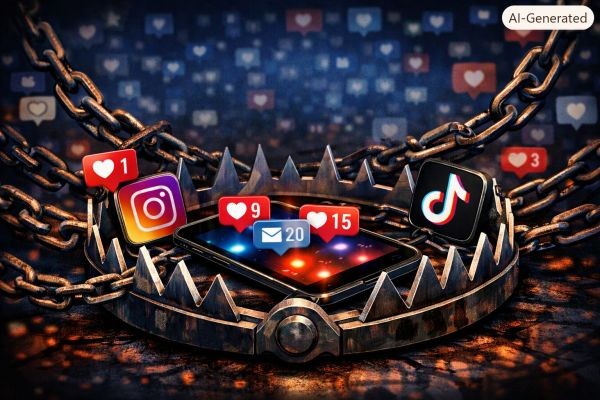
Why Everyone Wants to Leave Social Media—But Nobody Actually Can
"I'm deleting Instagram after this."
"TikTok wastes too much of my time."
"I need a digital detox."
If you've ever said these words, you're not alone.
Every day, millions of people announce they're quitting social media. Some delete the apps. Others deactivate their accounts. A few even buy basic phones to escape constant notifications.
Yet weeks later, many quietly return.
They reinstall Instagram "just to check messages."
They download TikTok "for five minutes."
They create a new account "to stay connected."
The cycle repeats.
So why is leaving social media so difficult?
The answer isn't simply a lack of willpower. It's about psychology, technology, relationships, and the way modern life has become deeply intertwined with digital platforms.
Social Media Is No Longer Just Entertainment
Ten years ago, social media was mostly about sharing vacation photos and chatting with friends.
Today, it's something much bigger.
People use it to:
- Find jobs
- Build businesses
- Learn new skills
- Follow breaking news
- Network professionally
- Shop online
- Stay connected with family
- Market personal brands
For many, deleting social media feels like disconnecting from society itself.
It's no longer just an app.
It's part of everyday life.
The Fear of Missing Out Never Disappeared
One of the strongest reasons people stay online is FOMO—Fear of Missing Out.
We worry about missing:
- Important news
- Friends' updates
- Viral trends
- Career opportunities
- Event invitations
- Conversations everyone else seems to be having
Even if we rarely interact, knowing that something might happen keeps us checking our phones.
Ironically, many people scroll for hours just to make sure they haven't missed anything important.
Algorithms Know You Better Than You Think
Have you ever opened an app for "just two minutes" and looked up half an hour later?
That's not an accident.
Modern recommendation algorithms analyze:
- What you watch
- What you like
- What you skip
- How long you pause
- Which posts you share
- Even what you almost click
The result is a feed designed to keep your attention for as long as possible.
The better the algorithm understands you, the harder it becomes to leave.
Every Scroll Offers a New Surprise
Unlike television, social media has no predictable ending.
One swipe could reveal:
- A hilarious meme
- A shocking news story
- A travel destination
- A life-changing productivity tip
- A celebrity announcement
- A cooking recipe
Because you never know what's coming next, your brain keeps encouraging you to swipe one more time.
That "one more" often becomes another hour.
Social Media Has Become Our Digital Identity
For many people, social media isn't just something they use.
It's where they express who they are.
Profiles contain:
- Photos
- Memories
- Friendships
- Career milestones
- Creative projects
- Personal achievements
Leaving a platform can feel like abandoning part of your identity.
The emotional attachment is much stronger than simply deleting an app.
The Creator Economy Makes Quitting Even Harder
Millions of people now earn money through social media.
They work as:
- Influencers
- Writers
- Designers
- Coaches
- Educators
- Small business owners
- Video creators
- Freelancers
For them, quitting social media doesn't just mean losing entertainment.
It could mean losing income, clients, or visibility.
This creates a difficult balance between protecting mental health and maintaining a career.
We Don't Just Consume Content—We Compare Ourselves
One of social media's biggest psychological effects is comparison.
Every day we see:
- Luxury vacations
- Perfect relationships
- Fitness transformations
- Career achievements
- Expensive lifestyles
- Entrepreneur success stories
What we rarely see are:
- Failures
- Rejections
- Loneliness
- Financial struggles
- Anxiety
- Everyday routines
Comparing your ordinary day to someone else's highlight reel can leave you feeling like you're constantly falling behind.
The Rise of Digital Fatigue
Interestingly, people are spending more time online while enjoying it less.
Many users describe feeling:
- Mentally exhausted
- Overstimulated
- Distracted
- Emotionally drained
After an hour of scrolling, it's common to wonder:
"What did I actually gain from that?"
The answer is often: not much.
Social Media Isn't Entirely Bad
It's important to recognize that social media also has enormous benefits.
It helps people:
- Learn new skills
- Discover educational content
- Stay in touch across continents
- Build supportive communities
- Promote small businesses
- Raise awareness for important causes
For students, entrepreneurs, and professionals, it can open doors that would have been impossible just a decade ago.
The problem isn't the technology itself.
It's how we use it.
Why Digital Detoxes Often Fail
Many people try quitting social media completely.
For a few days, everything feels refreshing.
Then reality sets in.
Friends organize events through Instagram.
Professional opportunities appear on LinkedIn.
Family members share updates on Facebook.
News spreads first on X.
Eventually, people feel disconnected and reinstall the apps.
The issue isn't that digital detoxes don't work.
It's that modern life is increasingly built around digital platforms.
A Better Goal: Digital Balance
Instead of trying to disappear from social media forever, many experts now recommend building healthier habits.
That could include:
- Turning off non-essential notifications.
- Setting screen-time limits.
- Following creators who educate or inspire.
- Unfollowing accounts that trigger comparison or negativity.
- Creating phone-free hours each day.
- Spending more time creating than consuming.
The goal isn't to eliminate technology.
It's to stop letting technology control your attention.
What Will Social Media Look Like in the Future?
As AI becomes more advanced, social media will likely become even more personalized.
Feeds may soon adapt not only to your interests but also to your:
- Mood
- Productivity patterns
- Shopping habits
- Learning goals
- Daily routine
This could make online experiences more useful—but also even harder to leave.
The challenge for future users won't simply be avoiding social media.
It will be using it intentionally.
Can You Really Quit?
Yes—but perhaps not in the way most people imagine.
Quitting doesn't have to mean deleting every account forever.
For many people, success looks like:
- Using social media as a tool instead of a habit.
- Logging in with a purpose rather than out of boredom.
- Creating more than consuming.
- Protecting time for hobbies, relationships, and offline experiences.
The healthiest relationship with social media isn't necessarily complete absence.
It's conscious use.
Final Thoughts
The reason so many people want to leave social media—but struggle to do so—is because these platforms have become deeply woven into modern life.
They connect us to friends, careers, entertainment, education, and opportunities. At the same time, they compete relentlessly for our attention, encouraging habits that can leave us distracted and mentally drained.
The solution isn't to view social media as an enemy.
It's to remember who should be in control.
Technology should support your goals—not quietly shape them.
In the end, the most valuable thing social media asks from us isn't money.
It's our attention.
And attention is one of the few resources we can never earn back once it's spent.
Frequently Asked Questions (FAQs)
1. Why is it so difficult to quit social media?
Social media combines personalized algorithms, social connections, entertainment, and professional opportunities, making it difficult to step away completely.
2. Is social media addiction a real problem?
While not everyone develops an addiction, excessive use can lead to compulsive checking, reduced focus, poor sleep, and increased stress for some users.
3. Is deleting social media the best solution?
Not always. For many people, setting boundaries and using social media intentionally is more sustainable than quitting entirely.
4. How can I reduce my screen time?
Start by disabling unnecessary notifications, using app time limits, scheduling phone-free periods, and replacing mindless scrolling with meaningful offline activities.
5. Can social media be good for mental health?
Yes. When used intentionally, it can provide education, community, inspiration, professional networking, and opportunities to connect with people around the world.