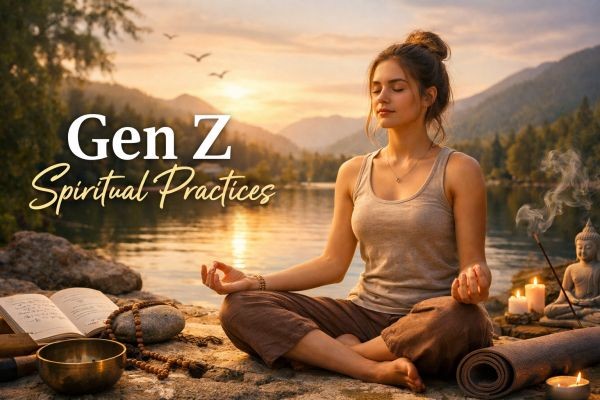
Why Gen Z Is Returning to Ancient Spiritual Practices
For years, Generation Z has been described as the most digitally connected generation in history.
They've grown up with smartphones, social media, artificial intelligence, and constant access to information. They can communicate with someone across the world in seconds, learn almost any skill online, and stay updated with global events in real time.
Yet, despite living in an age of endless connectivity, many young people are searching for something that technology alone cannot provide—inner peace.
Across the world, a quiet shift is taking place. More members of Gen Z are exploring meditation, yoga, breathwork, journaling, mindfulness, nature retreats, and ancient philosophies that have existed for centuries. Hashtags related to spiritual wellness attract millions of views, wellness communities are growing rapidly, and practices once considered "old-fashioned" are becoming part of modern lifestyles.
So why is the generation most associated with technology turning toward traditions that existed long before smartphones and social media?
The answer lies in the changing relationship between modern life, mental well-being, and the search for meaning.
A Generation Connected to Everything—Except Themselves
Never before has a generation had access to so much information.
News updates arrive every minute.
Social media never sleeps.
Notifications compete for attention throughout the day.
While technology has created incredible opportunities, it has also introduced new challenges.
Many young adults experience:
-
Information overload
-
Constant comparison
-
Digital fatigue
-
Academic and career pressure
-
Fear of missing out (FOMO)
-
Difficulty concentrating
Living in a world that never pauses can leave people feeling mentally exhausted, even when they're physically resting.
As a result, many Gen Z individuals are asking a different question:
"How do I slow down?"
Ancient spiritual practices offer one possible answer.
Spirituality Is Becoming Personal, Not Traditional
For many young people today, spirituality is less about following strict religious rules and more about developing a meaningful relationship with themselves and the world around them.
This modern approach often focuses on:
-
Self-awareness
-
Compassion
-
Gratitude
-
Inner balance
-
Purpose
-
Emotional resilience
Rather than searching for perfection, many are searching for peace.
That shift explains why practices rooted in centuries-old traditions continue to resonate in today's fast-moving world.
Meditation: Training the Mind in an Age of Distraction
Meditation has existed for thousands of years across different cultures.
Today, it has become one of the most widely adopted wellness practices among young adults.
For people constantly switching between apps, messages, and notifications, sitting quietly for even ten minutes can feel surprisingly challenging.
Yet many find that regular meditation helps them:
-
Improve focus
-
Reduce stress
-
Become more emotionally aware
-
Respond thoughtfully instead of reacting impulsively
In a world that rewards constant stimulation, meditation teaches the value of stillness.
Yoga Beyond Physical Fitness
Yoga is often associated with flexibility or exercise, but its origins go far deeper.
Traditional yoga combines movement, breathing, mindfulness, and self-discipline.
For Gen Z, yoga has become more than a workout.
It offers a chance to disconnect from digital distractions and reconnect with the body.
Many practitioners describe it as both physical exercise and mental therapy.
Breathwork: The Ancient Practice Finding Modern Attention
Breathing is automatic, yet intentional breathing has long been part of spiritual traditions.
Today, structured breathwork exercises are gaining popularity among students, entrepreneurs, athletes, and professionals.
People use breathing techniques to:
-
Calm anxiety
-
Improve concentration
-
Relax before sleep
-
Manage stressful situations
Sometimes the simplest tools are the ones we've overlooked for generations.
Journaling: A Conversation With Yourself
While journals have existed for centuries, they are experiencing a modern revival.
Many Gen Z individuals use journaling to organize thoughts, reflect on emotions, and clarify personal goals.
Common prompts include:
-
What am I grateful for today?
-
What challenged me today?
-
What can I improve tomorrow?
-
What truly matters to me?
Unlike social media, where thoughts are shared publicly, journaling creates a private space for honest self-reflection.
Nature Is Becoming a Form of Therapy
As daily life becomes increasingly digital, spending time outdoors feels more valuable than ever.
Walking through forests, sitting near rivers, hiking mountains, or simply watching sunsets has become part of many people's wellness routines.
Ancient traditions often emphasized harmony with nature.
Modern research increasingly supports the idea that time spent in natural environments can reduce stress and improve overall well-being.
For many Gen Z individuals, reconnecting with nature is also a way of reconnecting with themselves.
The Search for Meaning in a Fast-Paced World
Previous generations often followed more predictable life paths.
Today, young adults face endless possibilities—and endless uncertainty.
Career choices change rapidly.
Technology evolves constantly.
Artificial intelligence is reshaping industries.
In such an unpredictable environment, many people naturally begin asking deeper questions:
-
What gives life purpose?
-
How do I define success?
-
What kind of person do I want to become?
Ancient philosophies encourage reflection on questions that remain relevant regardless of the era.
Social Media Played an Unexpected Role
Ironically, the same platforms often blamed for distraction have also introduced millions of people to meditation teachers, yoga instructors, philosophers, psychologists, and wellness educators.
Short videos explaining mindfulness techniques or breathing exercises regularly reach global audiences.
While social media cannot replace genuine practice, it has helped make ancient wisdom more accessible than ever before.
Ancient Wisdom Meets Modern Science
One reason spiritual practices have gained broader acceptance is that many are now being studied scientifically.
Researchers continue exploring how practices like meditation, controlled breathing, and mindfulness may influence stress, attention, and emotional regulation.
This growing interest has encouraged more people to view these traditions not only as cultural practices but also as practical tools for daily life.
At the same time, it's important to remember that individual experiences vary, and spiritual practices are not substitutes for professional medical or mental health care when it's needed.
Building Your Own Spiritual Routine
You don't need to spend hours each day or completely change your lifestyle to begin exploring mindful habits.
Small daily practices can make a meaningful difference over time.
For example:
-
Spend 10 minutes meditating each morning.
-
Keep a gratitude journal.
-
Practice deep breathing before stressful situations.
-
Take a daily walk without your phone.
-
Read a few pages from a meaningful philosophical or spiritual book.
-
Spend time in nature every week.
-
Reflect on your values and long-term goals.
Consistency matters more than perfection.
Is This a Trend or a Lasting Shift?
Some people believe spirituality is simply another wellness trend.
Others see it as a response to the pressures of modern life.
Perhaps both views contain some truth.
Every generation seeks balance in different ways.
For Gen Z, that balance increasingly involves combining technological innovation with timeless practices that encourage presence, awareness, and emotional resilience.
The future may not require choosing between technology and spirituality.
Instead, it may involve learning how to use both wisely.
Final Thoughts
Generation Z is often described as the generation of smartphones, artificial intelligence, and constant connectivity.
Yet behind the screens, many young people are quietly rediscovering practices that have guided human well-being for thousands of years.
Meditation, yoga, mindful breathing, journaling, and spending time in nature are no longer viewed as outdated traditions. They are becoming practical tools for navigating a fast-moving, digitally connected world.
Perhaps this return to ancient spiritual practices isn't about escaping modern life.
It's about finding balance within it.
After all, technology can help us connect with the world.
But sometimes, the most important connection is the one we build with ourselves.
Disclaimer: This article is intended for educational and informational purposes only. Spiritual and mindfulness practices can support overall well-being but are not a replacement for professional medical, psychological, or mental health care. If you are experiencing ongoing emotional distress, seek guidance from a qualified healthcare professional.