Why Is Nepal Suffering From Devastating Floods? The Real Reasons Behind the Crisis
Nepal is known around the world for its mountains.
But the same geography that makes the country spectacular also makes it extremely vulnerable to natural disasters.
In recent days, that vulnerability has become painfully visible.
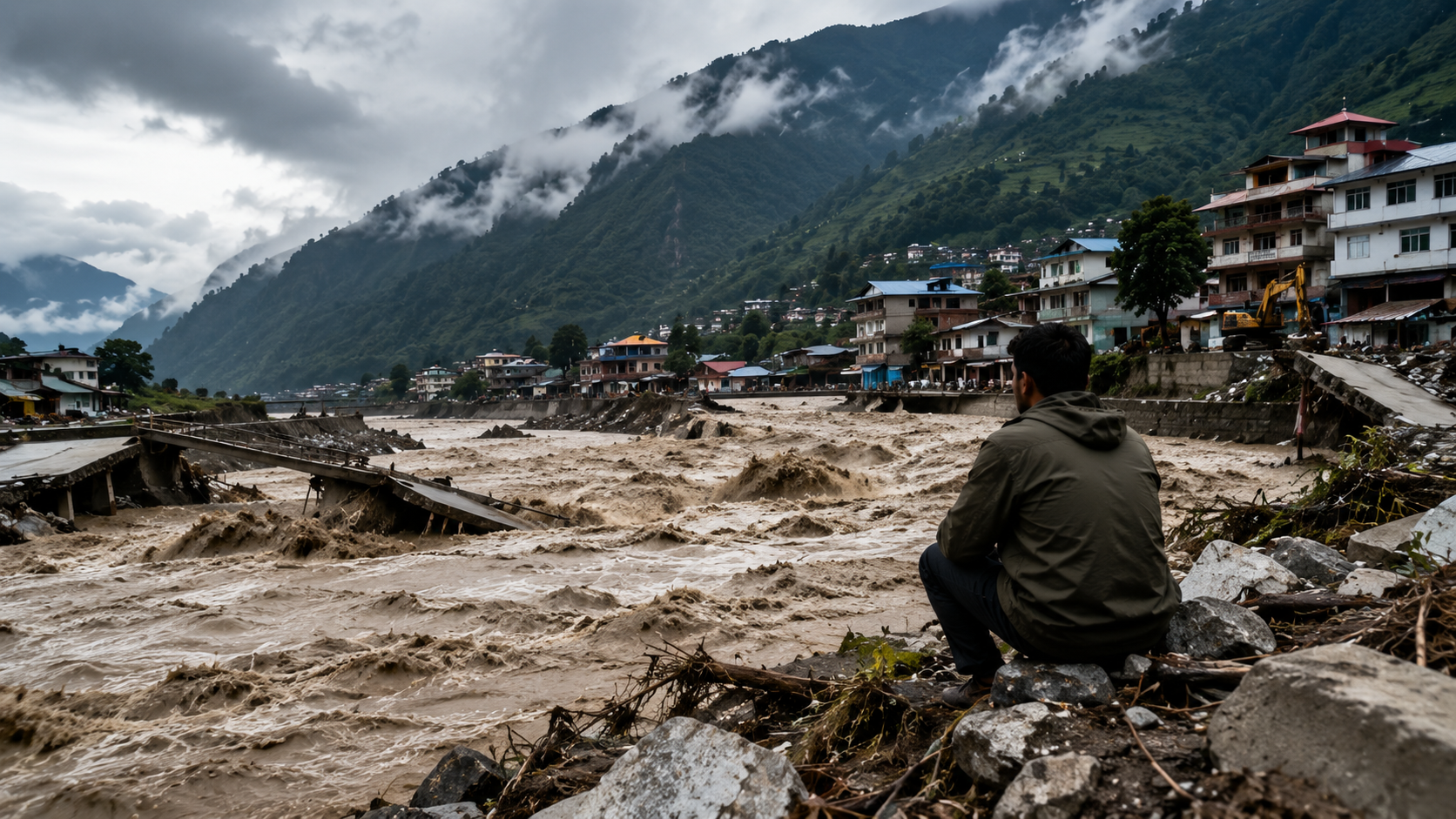
A devastating flash flood struck northern Nepal on August 26, 2026, affecting communities around the Bhotekoshi and Trishuli river systems. The disaster destroyed homes, roads, bridges and essential infrastructure, while rescue efforts were complicated by damaged transportation and communications networks. The Asian Development Bank has already approved a $5 million emergency grant for rescue and relief operations.
The situation remains fluid, and casualty figures have continued to change as rescue teams reach remote areas.
But one question is becoming increasingly important:
Why is Nepal suffering from such destructive floods?
The answer is not one single event.
It is a combination of Himalayan geography, extreme rainfall, unstable mountains, melting glaciers, climate change, landslides, vulnerable infrastructure and communities living close to rivers.
And understanding that combination is important—not only for Nepal, but for the entire Himalayan region.
What Happened in Nepal?
The latest disaster was not a conventional river flood that slowly developed after days of rain.
It was a flash-flood event.
According to Reuters, a glacier collapse in the Himalayas sent a massive avalanche of rock and ice into a river system, producing powerful mud and debris flows downstream. The sudden surge affected villages and infrastructure in both Nepal and Tibet.
Scientists and news reports have described a chain of events involving unstable ice and rock, rapidly moving debris and an enormous volume of water rushing through narrow Himalayan valleys.
That distinction matters.
A normal flood can sometimes give communities hours or days to prepare.
A flash flood can provide very little time at all.
Water mixed with mud, rocks and debris can move through valleys at tremendous speed, destroying bridges, roads, buildings and power infrastructure along the way.
And in mountainous Nepal, valleys often act like natural channels, concentrating the force of the water.
1. Nepal's Geography Makes Floods More Dangerous
The first reason is simple:
Nepal is extremely mountainous.
The country stretches from the low-lying Terai plains to the world's highest mountains.
This creates dramatic changes in elevation over relatively short distances.
When heavy rainfall, melting snow or a sudden release of water occurs high in the mountains, water can rapidly travel downhill through steep river valleys.
The result can be a dangerous combination:
steep slopes + fast-flowing rivers + loose rock and soil = high flash-flood and landslide risk.
The problem doesn't stop when the water reaches lower elevations.
Sediment and debris carried downstream can clog rivers, damage bridges and alter river channels, making subsequent flooding even more difficult to manage.
Nepal's own disaster-risk planning has long identified its steep terrain, monsoon rainfall, landslides and glacial hazards as major sources of vulnerability.
2. The Monsoon Brings Most of Nepal's Annual Rainfall
Nepal's flood problem is also closely connected to the South Asian monsoon.
The country's monsoon season generally runs from June to September, and around 80% of Nepal's annual rainfall occurs during this period, according to the Asian Development Bank.
That means enormous amounts of water enter Nepal's river systems within only a few months.
Normally, this seasonal rainfall is essential.
It supports agriculture, replenishes water supplies and sustains ecosystems.
The problem occurs when rainfall becomes extremely intense over a short period.
A few hours of intense rain can produce:
- Rapid river rises
- Flash floods
- Landslides
- Soil erosion
- Road collapses
- Debris flows
Nepal's Department of Hydrology and Meteorology currently maintains rainfall and river monitoring systems, with warning thresholds designed to identify dangerous rainfall and river conditions.
But predicting exactly where a mountain flash flood will occur remains extremely difficult.
3. Climate Change Is Making the Himalayan Risk More Complicated
This is one of the most important parts of the story.
Climate change does not mean that every individual flood is directly caused by global warming.
But warming temperatures are changing the conditions under which floods and other mountain disasters occur.
Research from the International Centre for Integrated Mountain Development (ICIMOD) found that flood frequency in High Mountain Asia has increased since 2000 and that rising temperatures are contributing to more frequent and less predictable floods.
That matters because the Himalayas are warming rapidly.
Higher temperatures can contribute to:
- Faster glacier melt
- Changes in snowmelt timing
- Expansion of glacial lakes
- Thawing of frozen ground
- Greater instability of mountain slopes
- Changes in river flow
ICIMOD warned ahead of the 2026 monsoon that even a below-normal monsoon would not necessarily mean lower disaster risk. Short bursts of intense rainfall, rising temperatures and increasing water stress could still create dangerous conditions.
In other words:
Less rain overall does not automatically mean less flooding.
A season can have relatively modest total rainfall but still contain extremely intense rainfall events.
That is one of the challenges of a changing climate.
4. Melting Glaciers Are Creating New Risks
The Himalayas contain thousands of glaciers that feed rivers across Asia.
But warming is changing these frozen landscapes.
As glaciers retreat, meltwater can collect behind natural dams made of ice, rock and sediment. These lakes can grow over time.
If the natural barrier fails, enormous quantities of water can suddenly move downstream.
This is known as a Glacial Lake Outburst Flood, or GLOF.
Nepal has already experienced such events.
In 2024, for example, an ice avalanche from the Manaslu Glacier triggered flooding from Birendra Tal, causing a sudden increase in flow in the Budhi Gandaki River downstream. Researchers from ICIMOD and Kathmandu University documented the chain of events using satellite imagery.
The latest 2026 disaster demonstrates that the danger is broader than simply watching glacial lakes.
Rock, ice and unstable mountain slopes can interact in complicated ways.
A glacier doesn't necessarily have to melt completely to create a disaster.
A sudden collapse of ice and rock can itself generate a destructive flood.
5. Landslides Turn Water Into a Weapon
Water alone can be destructive.
Water combined with mountains of mud, rocks and broken vegetation can be far worse.
Nepal experiences frequent landslides because of its steep terrain and intense rainfall.
When heavy rain saturates soil and weakens slopes, landslides can occur.
When mountain ice or rock collapses, huge quantities of debris can also enter rivers.
That debris can:
- Block a river.
- Create a temporary lake.
- Suddenly break apart.
- Send a powerful wave downstream.
This is why Himalayan floods are often better understood as multi-hazard disasters rather than simple flooding events.
One hazard triggers another.
Rain → landslide → river blockage → sudden release → flash flood → infrastructure failure.
The chain can happen rapidly.
6. Roads and Infrastructure Are Vulnerable
Another reason Nepal's floods become so devastating is the country's difficult terrain.
Building roads, bridges, hydropower projects and settlements in the Himalayas is challenging even under normal conditions.
When floods and landslides occur, transportation infrastructure can fail quickly.
During the latest disaster, bridges and roads were destroyed and important routes were disrupted. The damage has made it more difficult for rescue teams to reach affected communities and for supplies to move through the region.
This creates a dangerous cycle.
The disaster destroys the roads needed to respond to the disaster.
A community might survive the initial flood but then face difficulties accessing:
- Food
- Drinking water
- Medicine
- Electricity
- Communication
- Emergency medical care
That is why infrastructure resilience is just as important as flood forecasting.
A warning is useful only if people can actually evacuate.
And evacuation is much harder when roads and bridges are already damaged.
7. Rapid Urbanization Is Increasing Flood Risk
Nepal's flood vulnerability isn't limited to remote mountain villages.
Its growing towns and cities face their own problems.
Unplanned development can reduce natural drainage and increase the amount of water flowing over paved surfaces.
The Asian Development Bank has identified several factors increasing disaster vulnerability in Nepal's urban areas, including inadequate drainage, environmental degradation of watersheds and development that fails to adequately account for natural hazards.
When natural areas are replaced with roads, buildings and concrete surfaces, rainwater has fewer places to go.
Instead of slowly entering the soil, water can rapidly move toward streams and drainage systems.
If those systems cannot handle the volume, flooding follows.
So Nepal's flood problem is not only about what happens in the mountains.
It is also about how people build and expand communities downstream.
Is Climate Change the Only Reason?
No.
This is an important distinction.
It would be inaccurate to say:
“Climate change caused the Nepal flood.”
The latest event involved a specific physical trigger—a major collapse of glacier and rock material—and the disaster was amplified by Nepal's mountainous terrain and river systems.
But climate change can increase the background risk by warming glaciers, destabilizing frozen ground and altering rainfall and hydrological patterns.
Think of it this way:
The immediate trigger starts the disaster.
Climate change can change how likely and how severe certain triggers become.
And geography determines how quickly the consequences spread.
That combination is what makes Nepal particularly vulnerable.
Why Are Flash Floods So Difficult to Predict?
This may be the biggest challenge.
Weather forecasting can tell authorities that heavy rainfall is possible.
River monitoring can show that water levels are rising.
But predicting a sudden mountain collapse is much harder.
A flash flood may begin in a remote location where there are few people, sensors or cameras.
By the time the water reaches a populated valley, there may be very little time to react.
That is why experts increasingly emphasize real-time monitoring and early-warning systems.
Nepal's Department of Hydrology and Meteorology operates flood monitoring and warning systems, including a toll-free number for flood early warnings.
But monitoring needs to become increasingly connected across borders and across entire river basins.
Mountain rivers do not care about political boundaries.
What Can Nepal Do?
There is no single solution.
Nepal needs a combination of science, infrastructure and community preparedness.
Better Glacier Monitoring
Satellites, drones, sensors and ground-based monitoring can help scientists identify dangerous changes in glaciers, slopes and glacial lakes.
Stronger Early-Warning Systems
Warnings need to reach people quickly through mobile alerts, sirens, radio and local communication networks.
Safer Infrastructure
Roads, bridges, hydropower facilities and settlements should be designed using updated flood and landslide risk assessments.
Better Land-Use Planning
Communities should avoid unnecessary construction in high-risk floodplains and unstable slopes.
Stronger Regional Cooperation
Rivers and glaciers cross borders.
Nepal, China and India therefore need stronger cooperation on hydrological data, weather information, glacier monitoring and emergency warnings.
More Climate Adaptation
Reducing global emissions is essential, but countries such as Nepal also need resources to adapt to climate risks they did little to create.
Nepal Is Sending a Warning to the World
The tragedy unfolding in Nepal is not simply a story about one country's vulnerability.
It is a preview of a much larger challenge facing mountain regions around the world.
The Himalayas are changing.
Glaciers are retreating.
Temperatures are rising.
Rainfall patterns are becoming more unpredictable.
And millions of people live downstream from these mountains.
The lesson is therefore bigger than:
“Nepal had a flood.”
The real lesson is:
Mountain disasters are becoming increasingly interconnected.
A glacier can collapse.
A landslide can block a river.
A temporary lake can form.
A sudden release can destroy a bridge.
And a damaged road can prevent rescuers from reaching survivors.
One event can trigger another.
Final Thoughts
Nepal is not suffering from floods because of one bad monsoon or one broken riverbank.
The country is facing a complex combination of natural and human-made risks.
Its steep Himalayan geography concentrates water and debris.
The monsoon delivers huge volumes of rainfall.
Climate change is altering glaciers, temperatures and rainfall patterns.
Landslides can rapidly transform rivers into destructive channels.
Development and infrastructure can increase exposure.
And the remoteness of many communities makes emergency response extremely difficult.
The devastating August 2026 floods are a reminder that disaster prevention cannot begin after the water arrives.
It has to begin much earlier—with glacier monitoring, better forecasts, resilient infrastructure, smarter construction and communities that receive warnings early enough to act.
Nepal's mountains may be among the most beautiful places on Earth.
But as the climate changes, those same mountains are becoming a front line of a much larger global challenge.
The question now is not whether another flood will come.
It is whether Nepal—and the world—will be better prepared when it does.